
The Centre for Artificial Intelligence (CAI) in MANIT, Bhopal was setup in 2019 to strengthen and support research and education within artificial intelligence, machine learning and deep learning, as well as other relevant research that supports the development of artificial intelligence applications. Centre for Artificial Intelligence intends to tackle relevant problems for the society and work as a hub for cross-sectional research in different domains such as mechanical, electrical.
India has a great potential to succeed in the forefront of AI research. Therefore, it becomes important to strengthen long-term AI-related research to utilize full potential of AI for the upliftment of the society. Centre for Artificial Intelligence at MANIT, Bhopal aims to assume the role of pivot in the field of AI in India.
1. To impart value-based quality education to develop researchers and professionals who are skilled in the field of Artificial Intelligence and Machine Learning.
2. To evolve the knowledge ecosystem in the area of AI.
3. To connect and collaborate with different specializations as a hub for cross-sectional research.
4. To increase research potential in the area of AI at the Institute using high-performance computing hardware and delivered knowledge.
Centre for Artificial Intelligence aims to add value to the information by offering specialized courses in the field of AI. Specialized courses offered are designed to prepare students to build intelligent decision making machines and softwares using the knowledge imparted in the courses. Artificial Intelligence field is vast and the courses offered tries to explore the full breadth of the field along with the required depth in certain subareas and requisite programming skills. The course encompasses design theory of knowledge based systems, foundational algorithms and algorithm design theory, computer vision, programming using state-of-the-art APIs etc.
Courses offered are:
M.Tech. in Artificial Intelligence
Ph.D. in Artificial Intelligence
Faculty

Dr. Deepak Singh Tomar
Designation: Professor
Qualification: Ph.D
Research Area: Cyber Security, Machine Learning, Data Mining, Internet Technology
Email: deepaktomar[at]manit[dot]ac[dot]in,
Phone :+91-0755-4051304, +91-0755-4052645, +91-09827225851

Dr. Rajesh Wadhvani
Designation: Associate Professor And HOC
Qualification: Ph.D
Reserach Area:- Time Series Forecasting, Machine Learning
Email: rajeshwadhvani[at]manit[dot]ac[dot]in,wadhvani_rajesh[at]rediffmail[dot]com
Phone: +91-0755-4051317, +91-9893338992
More Information

Dr. Vikram Garg
Designation: Assistant Professor
Qualification: Ph.D.
Research Area: Evolutionary Algorithms, Robot Path Planning, Multi-Agent Systems and AI & Machine Learning
Email: drvikramgarg23[at]gmail[dot]com, vikram[at]manit[dot]ac[dot]in
Mobile: +91-9993415807
Dr. Ramesh Kumar Thakur
Designation: Assistant Professor
Qualification: Post Doc, Ph.D.
Research Area: Deep Learning, Image Processing, Machine learning, Artificial Intelligence, Robotics, Visual Cryptography, Visual Steganography
Email: ramesh.thakur2012[at]gmail[dot]com, tramesh[at]manit[dot]ac[dot]in
Mobile: +91-8340333155
Area : The Centre offers the following research area for M. Tech. and Ph.D. students
Machine Learning/ Artificial Intelligence
|
Faculty Name |
Research Activities |
|---|---|
|
Dr. Ashish Kumar Sahu |
Brain Computer Interface, Emotion Recognition, Human Activity Recognition, Real World Classification problems
|
|
Dr. Mitul Kumar Ahirwal |
|
|
Dr. Meenu Chawla |
|
|
Dr. Sri Khetwat Saritha |
|
|
Dr. Sanyam Shukla |
|
|
Dr. Vikram Garg |
Image Processing and Information Retrieval
|
Faculty Name |
Research Activities |
|---|---|
|
Dr. R. K.Pateriya |
Semantic Web, Ontology Target Entity Disambiguation, Sentiment Analysis, Emotion Analysis, Topic Modeling |
|
Dr. Sri Khetwat Saritha |
|
|
Dr. Jyot iBharti |
|
|
Dr. Rajesh Wadhvani
|
|
|
Dr. Deepak Singh Tomar
|
|
|
Dr. Jaytrilok Choudhary
|
|
|
Dr. Ashish Kumar Sahu
|
Big Data Analytics
|
Faculty Name |
Research Activities |
|---|---|
|
Dr. Meenu Chawla |
Data Capturing and Storage, Machine learning algorithms for Big data, Hadoop, Spark, Hive ,NOSQL, Map Reduce, Storm |
|
Dr. Nilay Khare |
|
|
Dr. R K Pateriya |
|
|
Dr. Akhtar Rasook |
|
|
Dr. Dhirendra Pratap Singh |
|
|
Dr. Jaytrilok Choudhary |
|
|
Dr. Deepak Singh Tomar |
|
|
Dr. Mansi Gyanchandani |
|
|
Dr. Pragati Agrawal |
|
|
Dr. Vikram Garg |
Intelligent Systems Design Lab
1. Introduction
The Intelligent Systems Design Laboratory (ISDL) at the Center of Artificial Intelligence, MANIT Bhopal is dedicated to fostering research, innovation, and education in the design and development of intelligent computational systems capable of perception, reasoning, learning, and autonomous decision-making.
The laboratory serves as a multidisciplinary research and learning environment where Artificial Intelligence, Machine Learning, Computer Vision, Natural Language Processing, and Robotics converge to solve real-world challenges. It provides a dynamic ecosystem for students, researchers, and faculty to design, simulate, and deploy intelligent agents and cognitive systems across diverse domains.
3. Laboratory Overview
- Lab Name: Intelligent Systems Design Laboratory
- Founded: 2025
- Coordinator: Dr. Vikram Garg
- Primary Focus Areas:
- Intelligent Agent Architectures and Multi-Agent Systems
- Knowledge Representation and Reasoning
- Planning and Decision-Making Systems
- Deep Reinforcement Learning and Adaptive Control
- Human - AI Collaboration and Cognitive Computing
- Explainable and Trustworthy AI
- AI for Autonomous Systems and Smart Environments
- Location: Center of Artificial Intelligence, MANIT Bhopal, Madhya Pradesh, 462003, India
4. Personnel
4.1. Faculty Coordinator
- Dr. Vikram Garg
- Position: Assistant Professor, Center of AI
- Qualifications: Ph.D. in Robotics
- Research Interests: Evolutionary Algorithms, Robot Path Planning, Multi-Agent Systems and AI & Machine Learning
4.2. Affiliated Faculty
- Dr. Vikram Garg (Coordinator)

4.3. Current Ph.D. Scholars
- Mr. Vijay Pawar (Area: Robotics)
4.4. Current M.Tech Students
- Mr. Karamvir Singh
- Mr. Bibin Saju Joseph
- Mr. Digvijay Singh
- Ms. D. Shruti
- Ms. Amrita
- Mr. Vatsalya
- Mr. Pratham
5. Infrastructure & Facilities
Our lab is equipped with:
|
Sl No |
Equipment Name |
|
1 |
Robot engineering Learning Kits |
|
2 |
Autonomous Driving Vehicles Solar Power |
|
3 |
Sensor kit (Ultrasonic Sensor, light Sensor, Distance, Force, Touch etc ) |
|
4 |
Swarm Miniature Drone Robots and Setup |
|
5 |
Articulator Robot Arm
|
|
6 |
Differential Mobile Robot |
|
7 |
Drone Simulator |
|
8 |
AI+IoT Builder Workstation |
|
9 |
High end Desktop 14th Gen or higher |
6. Research and Publications
6.1. Selected Publications
- Tiwari, P, Khetwat, S & Garg, V. (2025). An Analysis of Explainable Transformer Models to Improve Question Answering for Depression Detection. ICCCNT-2025.
- Joseph, B & Garg, V. (2025). Comparative Evaluation of YOLOv8 Variants on Aerial Object Detection with DOTAv1.5. REACS-2025 (Accepted).
6.2. Patents
- Title: Smart Back Support Belt (Published)
- Description: AI based smart back support belt for preventing Musculoskeletal injuries.
- Application No.: [461694-001]
7. Collaborative Environment
The Intelligent Systems Design Lab operates as a collaborative platform that connects:
- Students - working on innovative AI projects and theses.
- Faculty and Researchers - exploring advanced models for learning and reasoning.
- Industry Partners - integrating intelligent automation into real-world systems.
- Funding Agencies - supporting mission-driven research in national AI initiatives.
8. Contact Information
- Address: Intelligent Systems Design Laboratory, Center of Artificial Intelligence, MANIT Bhopal, Bhopal, Madhya Pradesh 462003, India
- Email: vikram@manit.ac.in
- Phone: +91-9993415807
Computer Vision Lab
Center of Artificial Intelligence, MANIT Bhopal
1. Introduction
The Computer Vision Laboratory at the Center of Artificial Intelligence (CAI), MANIT Bhopal, is a state-of-the-art research and learning facility dedicated to exploring the intersection of visual perception, artificial intelligence, and machine learning. The lab focuses on empowering computers to interpret, analyze, and understand visual information from the world, much like human vision.
This laboratory serves as a core hub for research, innovation, and education in image processing, pattern recognition, 3D vision, and deep learning-based visual intelligence. It enables students, scholars, and faculty to design and deploy real-world vision systems for applications in autonomous systems, medical imaging, surveillance, augmented reality (AR), virtual reality (VR), and robotics.
3. Laboratory Overview
- Lab Name: Computer Vision Laboratory
- Founded: 2025
- Coordinator: Dr. Ramesh Kumar Thakur
- Primary Focus Areas:
- Image and Video Processing
- Object Detection, Recognition, and Tracking
- Image Restoration and Enhancement (Denoising, Super-Resolution)
- Semantic and Instance Segmentation
- 3D Vision and Depth Estimation
- Facial Recognition and Emotion Analysis
- Vision for Robotics and Autonomous Systems
- Augmented, Virtual, and Mixed Reality (AR/VR/MR)
- Medical Image Analysis and Remote Sensing
- Location: Center of Artificial Intelligence, MANIT Bhopal, Madhya Pradesh, 462003, India
4. Personnel
4.1. Faculty Coordinator
- Dr. Ramesh Kumar Thakur
- Position: Assistant Professor, Center of AI
- Qualifications: PostDoc(Northwestern University, USA), Ph.D (IIT Patna)
- Research Interests: Deep Learning, Image Processing, Machine learning, Artificial Intelligence, Robotics, Visual Cryptography, Visual Steganography
4.2. Affiliated Faculty
- Dr. Ramesh Kumar Thakur (Coordinator)

4.3. Current Ph.D. Scholars
- Ms. Tanveer Fateema Khan (Area: Image Processing)
- MS Shraddha Verma (Area: Image Processing)
- Ankit Temurnikar
- Swati Shrivastava
- Mukesh Kumar
- Smita Mishra
4.4. Current M.Tech Students
- Mr. Shashank Gupta
- Mr. Nikhil Gupta
- Mr. Anuj Kumar Singh
- Mr. Alfahad Ansari
- Ms. Shraddha Gupta
- Barun Kumar
- Gatla Sai Puneeth Reddy
- Ashish Choukikar
5. Infrastructure & Facilities
Our lab is equipped with:
|
Sl No |
Equipment Name |
|
1 |
Thermal Sensors / Thermal Cameras |
|
2 |
3D LiDAR Sensor |
|
3 |
Depth Cameras |
|
4 |
Mixed Reality Device |
|
5 |
AR Device (Android) |
|
6 |
360° Camera with tripod stand |
|
7 |
XR Device: 256GB with link cable |
|
8 |
Audio System: 4.1 Channel Multimedia Speaker System |
|
9 |
Advanced VR Device: (512GB) with link cable & carry case |
|
10 |
VR Ready Workstation |
|
11 |
High-Resolution Camera Systems (Computer Vision Input)Resolution : 8 MP to 50+ MP |
|
12 |
Haptics Device |
|
13 |
Fingerprint Scanner |
|
14 |
IRIS Scanner |
6. Research and Publications
6.1. Selected Publications
Journal Publications
- Shashank Gupta, Ramesh Kumar Thakur, and Mansi Gyanchandani. Enhancing diffusion-based image restoration with per-timestep edge guidance. Procedia Computer Science, volume 283, pages 1857–1865, 2026.
- Tanveer Fatema Khan, Ramesh Kumar Thakur, and Manasi Gyanchandani. Bpsnet: Edge-preserving sar image denoiser using attention based bit plane slicing network. Signal, Image and Video Processing, volume 20, page 406. Springer, 2026.
- Tanveer Fatema Khan, Ramesh Kumar Thakur, and Manasi Gyanchandani. Smsdnet: Sar multiscale dual-domain despeckling network with feature-space diffusion refinement. IEEE Geoscience and Remote Sensing Letters, volume 23, pages 4008205-4008205, 2026.
International Conferences:
- Ramesh Kumar Thakur, Anshika Raj, Aayush Mangal, Tanveer Fatema Khan and Sanyam Shukla., Multi-Scale Attention Frequency GAN for Low-Light UAV Aerial Image Enhancement, In 2nd International Conference on New Product Development and Smart Manufacturing (NPDSM 2026), Springer, 2026.
- Ramesh Kumar Thakur, Samar Singh, Tanveer Fatema Khan and Sanyam Shukla., A Novel Color Wavelet Difference Reduction (CWDR) based Image Compression Technique using Wavelet Filters, In 2nd International Conference on New Product Development and Smart Manufacturing (NPDSM 2026), Springer, 2026.
- Ramesh Kumar Thakur, Aman Madhukar Pagare, Keshav Vyas, Saksham Singh Rathore and Swathi Menon., EnhancedNLMCNN: A Dual-Domain Attention Network with Ghost Convolutions for Robust Image Denoising, In 2nd International Conference on New Product Development and Smart Manufacturing (NPDSM 2026), Springer, 2026.
- Ramesh Kumar Thakur, Amarjeet Kumar, Tanveer Fatema Khan and Sanyam Shukla., Low-Light Image Enhancement with Noise Reduction using CNN, In 2nd International Conference on New Product Development and Smart Manufacturing (NPDSM 2026), Springer, 2026.
- Ramesh Kumar Thakur, Rahul Kumar, Keshav Anand Bhagat, Tanveer Fatema Khan and Chanchal Suman., Dynamic Traffic Signal Control Using Real-Time Vision-Based Detection and Fairness-Constrained Scheduling, In 2nd International Conference on New Product Development and Smart Manufacturing (NPDSM 2026), Springer, 2026.
- Shashank Gupta, Ramesh Kumar Thakur and Mansi Gyanchandani., Few-Step Zero-Shot Image Restoration via Adaptive Guidance and Frequency-Aware Initialization in Consistency Models, In 2nd International Conference on New Product Development and Smart Manufacturing (NPDSM 2026), Springer, 2026.
- Shahbaz Hussain, Ramesh Kumar Thakur, Nikhil Gupta and Tanveer Fatema Khan., LW-Diffusion: Latent-Wavelet Diffusion for Thermal Infrared Image Denoising, In 2nd International Conference on New Product Development and Smart Manufacturing (NPDSM 2026), Springer, 2026.
- Prashant Chandra, Ramesh Kumar Thakur, Nikhil Gupta and Tanveer Fatema Khan., Decoupled Dual-Phase Network for Real-Time Multispectral Image Fusion under Hardware Sensor Degradation, In 2nd International Conference on New Product Development and Smart Manufacturing (NPDSM 2026), Springer, 2026.
- Hassan Khan, Ramesh Kumar Thakur, Nikhil Gupta and Tanveer Fatema Khan., Joint Infrared and Visible Image Fusion Network (JIRF-FusionNet) with Deformable Spatial Alignment in Real-time, In 2nd International Conference on New Product Development and Smart Manufacturing (NPDSM 2026), Springer, 2026.
- Lutfullah Bin Ehsan, Ramesh Kumar Thakur, Nikhil Gupta and Tanveer Fatema Khan., A High-Fidelity Infrared Thermal Image Denoising Method Based on an Advanced Multi-Scale Attention-Driven Network with Hybrid Edge-Aware Loss, In 2nd International Conference on New Product Development and Smart Manufacturing (NPDSM 2026), Springer, 2026.
- Subhrank Priya, Ramesh Kumar Thakur, Md Alfahad Ansari and Tanveer Fatema Khan., Speckle-Aware Retinex Decoding Network for Low Illumination SAR Images with Structure Preservation, In 2nd International Conference on New Product Development and Smart Manufacturing (NPDSM 2026), Springer, 2026.
- Raj Laxmi, Ramesh Kumar Thakur, Md Alfahad Ansari and Tanveer Fatema Khan., Enhancing Low Light Images With Perceptual Loss And Adaptive Instance Normalization, In 2nd International Conference on New Product Development and Smart Manufacturing (NPDSM 2026), Springer, 2026.
- Rohan Kumar, Ramesh Kumar Thakur, Md Alfahad Ansari and Tanveer Fatema Khan., SAR Images Enhancement Through Balanced SAR Image Enhancement Pipeline Using Structure-Preserving Retinex Approach with Edge-Based Pseudo-Colorization, In 2nd International Conference on New Product Development and Smart Manufacturing (NPDSM 2026), Springer, 2026.
- Raj Maurya, Ramesh Kumar Thakur, Anuj Mishra and Tanveer Fatema Khan., Optimization of DVDNet Video Denoising Using DIS Optical Flow, AMP and GPU Acceleration, In 2nd International Conference on New Product Development and Smart Manufacturing (NPDSM 2026), Springer, 2026.
- Sourav Anand, Ramesh Kumar Thakur, Anuj Mishra and Tanveer Fatema Khan., An Edge-Efficient Low-Visibility Video Conferencing Framework for Resource-Constrained Consumer CPUs, In 2nd International Conference on New Product Development and Smart Manufacturing (NPDSM 2026), Springer, 2026.
- Anupam Singh, Ramesh Kumar Thakur, Anuj Mishra and Tanveer Fatema Khan., Real-Time Video Enhancement for Low-Light Video Conferencing using a Lightweight Multi-Branch CNN and Recurrent Temporal Stabilization, In 2nd International Conference on New Product Development and Smart Manufacturing (NPDSM 2026), Springer, 2026.
- Khushi Mishra, Ramesh Kumar Thakur, Anuj Mishra and Tanveer Fatema Khan., Extended Evaluation of LiteDVDNet: Blind Noise Estimation, Perceptual Metrics, and Failure Analysis for Real-Time Video Denoising, In 2nd International Conference on New Product Development and Smart Manufacturing (NPDSM 2026), Springer, 2026.
- Janhavi P. Tidke, Ramesh Kumar Thakur, Shashank Gupta and Tanveer Fatema Khan., Brightness-Aware Dynamic DDIM Step Scheduling for Efficient Low-Light Image Enhancement, In 2nd International Conference on New Product Development and Smart Manufacturing (NPDSM 2026), Springer, 2026.
- Almas, Ramesh Kumar Thakur, Guneet Singh Bagga and Tanveer Fatema Khan., PR-ASM: Physics-Realistic Anisotropic Atmospheric Scattering Model for Synthetic Haze Generation and Remote Sensing Image Restoration, In 2nd International Conference on New Product Development and Smart Manufacturing (NPDSM 2026), Springer, 2026.
- Devina Sharma, Ramesh Kumar Thakur, Guneet Singh Bagga and Tanveer Fatema Khan., Lightweight SAR Image Dehazing Using Haze-Prior Guided Multimodal Fusion and Multi-Scale Large Kernel Attention, In 2nd International Conference on New Product Development and Smart Manufacturing (NPDSM 2026), Springer, 2026.
- Ishan Raj, Ramesh Kumar Thakur, Shraddha Gupta and Tanveer Fatema Khan., WATRNet: A Wavelet-Aware Thermal Restoration Network with Noise-Aware Frequency Gating for Thermal Image Denoising, In 2nd International Conference on New Product Development and Smart Manufacturing (NPDSM 2026), Springer, 2026.
- Harsha Vardhan Reddy, Ramesh Kumar Thakur, Guneet Singh Bagga and Tanveer Fatema Khan., Adaptive SAR-Optional Lightweight CNN for Remote Sensing Image Dehazing, In 2nd International Conference on New Product Development and Smart Manufacturing (NPDSM 2026), Springer, 2026.
- Md Akmal, Ramesh Kumar Thakur, Shashank Gupta and Tanveer Fatema Khan., EAM-NAFNet: An Edge-Aware Nonlinear Activation-Free Network for Lightweight Medical Image Denoising, In 2nd International Conference on New Product Development and Smart Manufacturing (NPDSM 2026), Springer, 2026.
- Sriram Banda, Ramesh Kumar Thakur, Shraddha Gupta and Tanveer Fatema Khan., Thermo-Former: A Self-Supervised Transformer Framework for Thermal Image Denoising Using Adaptive Edge-Aware Attention, In 2nd International Conference on New Product Development and Smart Manufacturing (NPDSM 2026), Springer, 2026.
- Nikhil Gupta and Ramesh Kumar Thakur., AR-UNet: An Attention-Driven Deep Learning Framework for Thermal Image Denoising, In 2nd International Conference on New Product Development and Smart Manufacturing (NPDSM 2026), Springer, 2026.
- Abhhijatya Singh, Ramesh Kumar Thakur, Shraddha Gupta and Tanveer Fatema Khan., LightThermNet: Edge-Preserving Noise-Aware Lightweight CNN for Real-Time Thermal Image Denoising, In 2nd International Conference on New Product Development and Smart Manufacturing (NPDSM 2026), Springer, 2026.
- Poorvanshi Lowanshi, Ramesh Kumar Thakur, Shashank Gupta and Tanveer Fatema Khan., Adaptive Multi-Degradation Diff-Mamba for Efficient All-in-One Blind Image Restoration, In 2nd International Conference on New Product Development and Smart Manufacturing (NPDSM 2026), Springer, 2026.
- Sarthak Choudhary, Ramesh Kumar Thakur, Guneet Singh Bagga and Tanveer Fatema Khan., Prompt Engineering Techniques and Their Effect on Large Language Model Output Quality, In 2nd International Conference on New Product Development and Smart Manufacturing (NPDSM 2026), Springer, 2026.
- Gurleen Kaur Bhatia, Ramesh Kumar Thakur, Tanveer Fatema Khan, and Sanyam Shukla., Illumination-Aware Network for Low-Light Image Enhancement, In Fourth International Conference on Data Science and Network Engineering (ICDSNE 2026), Springer, 2026.
- Aayush Mangal, Anshika Raj, Ramesh Kumar Thakur, and Sanyam Shukla., LRMF: Local Reliability-Modulated Fusion of Thermal and Visible Face Images, In Fourth International Conference on Data Science and Network Engineering (ICDSNE 2026), Springer, 2026.
- Sushant Sharma, Ramesh Kumar Thakur, and Sanyam Shukla., DARNet: A Dual Attention Retinex Network for Low-Light Image Enhancement, In Fourth International Conference on Data Science and Network Engineering (ICDSNE 2026), Springer, 2026
6.2. Patents
- Title: Smart Back Support Belt (Published)
- Description: AI based smart back support belt for preventing Musculoskeletal injuries.
- Application No.: [461694-001]
7. Collaborative Environment
The Computer Vision Lab actively encourages collaboration:
- Student Projects and Research: B.Tech, M.Tech, and Ph.D. scholars conduct innovative projects in visual AI.
- Industry and Academic Partnerships: Collaborative research with national and international organizations.
- Workshops and Hackathons: Hands-on training sessions on Computer Vision and Deep Learning.
- Publications and Funding: Research outcomes published in reputed AI and vision journals and conferences.
8. Contact Information
- Address: Computer Vision Laboratory, Center of Artificial Intelligence, MANIT Bhopal, Bhopal, Madhya Pradesh 462003, India
- Email: tramesh@manit.ac.in
- Phone: +91-8340333155
IoT & Health-IoT Laboratory
Department of Computer Science & Engineering, MANIT Bhopal
1. Introduction
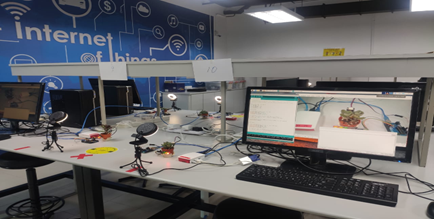
The Internet of Things (IoT) & Health-IoT Laboratory, established in 2022 within the Department of Computer Science & Engineering at Maulana Azad National Institute of Technology (MANIT), Bhopal, is a dedicated research facility. The lab's mission is to advance research and education in the fields of embedded sensing systems, signal processing, machine learning for sensor data, healthcare informatics, robotics, and human-activity recognition.
The laboratory provides a dynamic environment for undergraduate, postgraduate, and Ph.D. students to pursue cutting-edge research. We are committed to building end-to-end prototypes, from initial sensing and data acquisition to machine learning inference and final deployment. Our work is strengthened by robust collaborations with industry partners and clinical institutions.
2. Laboratory Overview
- Lab Name: Internet of Things & Health-IoT Laboratory
- Founded: 2022
- Coordinator: Dr. Vijay Bhaskar Semwal
- Primary Focus Areas:
- Internet of Things (IoT)
- Wearable & Flexible Sensors
- Edge AI & Computing
- Human Activity Recognition (HAR)
- Biomedical Signal Processing
- Location: Department of Computer Science & Engineering, MANIT Bhopal, Madhya Pradesh, 462003, India
3. Personnel
3.1. Faculty Coordinator

- Dr. Vijay Bhaskar Semwal
- Position: Assistant Professor, Department of CSE
- Qualifications: Ph.D. in Robotics & AI
- Research Interests: IoT, Wearable/IMU sensors, Human-Activity Recognition, Gait Analysis, Edge Computing, and Healthcare AI.
3.2. Affiliated Faculty
- Dr. Vijay Bhaskar Semwal (Coordinator)
.3. Graduated Ph.D. Scholars
- Dr. Rahul Jain
- Dr. Anjali Gupta
- Dr. Pratibha Tokas
3.4. Current Ph.D. Scholars
- Mr. Pranay Yadav
- Mr. Swapnil MURAL
- Mr. Hemant Kumar (Area: Robotics)
3.5. Current M.Tech Students
- Mr. Krishna Kumar Burman
- Ms. Namrata Singh
- Mr. Satyam Singh
- Mr. Rishi Raj
- Mr. Sai Chakri
- Mr. Anirudh Khade
- Mr. Furqan Khan
4. Laboratory Equipment
|
Devices |
Item / Model |
About |
Image |
|
Fitness or Exercise machine |
Treadmill |
A treadmill is an exercise machine that allows a person to walk, jog, or run indoors on a moving belt. |
|
|
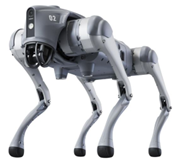
Quadruped robot |
GO 2 Unitree |
The Go2 Unitree robot is a quadruped robotic dog designed for mobility, AI interaction, and versatile applications. |
|
|
Biomechanical sensor system |
Force plate |
It is a measuring device that detects ground reaction forces generated by a body standing, walking, or jumping on it. |
|
|
Wearable EEG |
wearable sensing revolutionizing EEG DSI |
It is a wireless, dry-electrode EEG headset that records brain activity for research, clinical, and neurotechnology applications. |
|
|
Humanoid education/research |
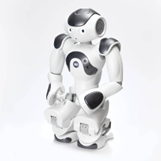
Nao6 robot |
This is a humanoid robot developed by SoftBank Robotics, designed for education, research, and human-robot interaction with advanced sensors and AI capabilities. |
|
|
Prototyping |
3D Printer |
A 3D printer is a machine that creates three-dimensional objects by adding material layer by layer based on a digital model. |
|
|
Wearable brain computer interface |
EEG-E motive |
EEG Emotiv is a wearable neurotechnology device that records brain activity through electroencephalography for research, gaming, and cognitive applications. |
|
|
Rehabilitation equipment |
Exercise Stationary cycle |
An exercise stationary cycle is a fitness machine that simulates cycling indoors to improve cardiovascular health, endurance, and leg strength. |
|
|
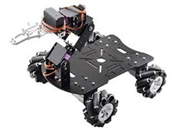
Mobile Manipulator |
Mecanum wheel robot with robotic arm |
A mecanum wheel robot is a mobile robot equipped with special omni-directional wheels that allow it to move in any direction without changing its orientation. |
|
5. Research and Publications
5.1. Selected Publications
- Semwal, V. B., & Doe, A. (2025). Human Activity Recognition using GRU and Transformer Models. Journal of IoT Systems.
- Semwal, V. B., & Roe, B. (2024). Gait Trajectory Estimation with Minimal IMUs. IEEE SensorApps.
- Semwal, V. B., et al. (2023). Edge Computing for Health-IoT. IEEE Internet of Things Journal.
- Semwal, V. B., et al. (2023). Pattern identification of different human joints for different human walking styles using inertial measurement unit (IMU) sensor. Springer.
- Semwal, V. B., et al. (2023). Robust and accurate feature selection for humanoid push recovery and classification: deep learning approach. Springer.
- Semwal, V. B., et al. (2023). An optimized hybrid deep learning model using ensemble learning approach for human walking activities recognition. Springer.
- Semwal, V. B., et al. (2023). Biometric gait identification based on a multilayer perceptron. Elsevier Internet of Things Journal.
5.2. Patents (Filed)
- Title: Wearable System for Real-Time Gait Monitoring
- Description: A lightweight, low-power IMU-based system for continuous gait analysis and fall risk assessment.
- Application No.: [XXXX/DEL/20YY]
- Title: IoT-Enabled Remote Health Diagnostics Platform
- Description: A platform for secure data acquisition and edge inference for telehealth applications.
- Application No.: [YYYY/MUM/20ZZ]
6. Product Designs & Prototypes
- Treadmill Integration: System to track belt speed for pace calculation.
- Mecanum Wheel Robot: Prototypes utilizing Raspberry Pi, Arduino, and Jetson Nano.
- GO 2 Unitree Dog Robot: Development leveraging its high-performance CPU and AI accelerator.
- Force Plate Analysis: Software for analyzing high-precision 3D force and moment data.
- Virtual Reality Headset: Systems utilizing head movement tracking.
- Nao6 Robot Interaction: Programming for natural interaction leveraging its 25 DOF and sensor suite.
- 3D Printed Prototypes: Custom parts and models created directly from CAD files.
7. Contact Information
- Address: IoT & Health-IoT Laboratory Department of Computer Science & Engineering, MANIT Bhopal, Bhopal, Madhya Pradesh 462003, India
- Email: vbsemwal@manit.ac.in
- Phone: +91-7541805885
Brain-Computer Interface Laboratory
Department of Computer Science & Engineering, MANIT Bhopal
1. Introduction
The Brain-Computer Interface (BCI) Laboratory, established in 2024 at the Maulana Azad National Institute of Technology (MANIT), Bhopal, is a specialized research center dedicated to advancing brain-machine interaction through the use of Electroencephalography (EEG) signals.
The lab's primary focus is to develop direct communication pathways between the human brain and external devices. It serves as a hub for research in EEG signal analysis, cognitive neuroscience, and human-computer interaction. Through the use of advanced equipment and AI-driven signal processing techniques, the lab supports a wide range of applications in assistive technologies, healthcare, and neurofeedback. We provide an environment that fosters hands-on training and innovation for undergraduate, postgraduate, and Ph.D. researchers.
2. Laboratory Overview
- Lab Name: Brain-Computer Interface Laboratory (BCI Lab)
- Established: 2024
- Lab In-Charge: Dr. Mitul Kumar Ahirwal
- Research Focus:
- Emotion Recognition
- Mental Workload Analysis
- Motor Imagery
- Cognitive Neuroscience1
- Location: Second Floor, B-Block, Department of Computer Science and Engineering, MANIT Bhopal, Madhya Pradesh 462003, India
3. Lab In-Charge

Dr. Mitul Kumar Ahirwal
Position: Associate Professor, Department of Computer Science and Engineering
4. Laboratory Equipment & Software
4.1. Hardware
|
Category |
Item / Model |
Description |
Image |
|---|---|---|---|
|
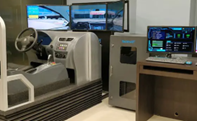
Simulation |
TecknoSIM Car Driving Simulator |
An advanced simulator for training drivers in realistic scenarios. |
|
|
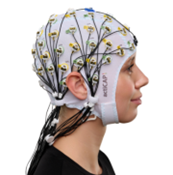
EEG Acquisition |
LiveAmp 32-channel EEG |
A wireless EEG amplifier for mobile EEG applications. |
|
|
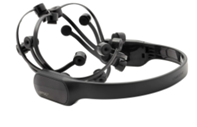
EEG Acquisition |
EPOC+ 14-channel Wireless EEG |
A wireless EEG headset for mobile EEG applications. |
|
|
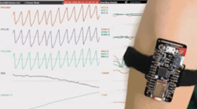
Physiological Sensing |
EmotiBit |
A wearable sensor module for capturing emotional, physiological, and movement data. |
|
|
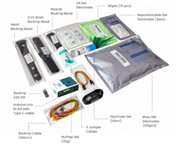
Neuroscience Kit |
Neuor Kit (DIY) |
Includes the BioAmp EXG Pill for recording various biopotential signals (EEG, ECG, EMG, EOG). |
|
|
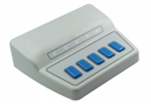
Response Collection |
Chronos Response Device |
Enables millisecond-accurate response collection, voice recording, and external device synchronization. |
|
|
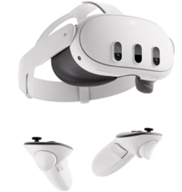
Virtual Reality |
Meta Quest 3 |
A next-generation mixed reality headset for immersive research, training, and interactive applications. |
|
4.2. Software
|
Name |
Description |
Image |
|
Brain Vision Recorder |
Multifunctional EEG recording software for versatile and easy-to-use recording setup and execution. |
|
|
E-Prime |
A platform for designing, running, and analyzing behavioral experiments with millisecond-precise timing. |
|
|
EmotivPRO |
Advanced EEG recording software designed for researchers and developers, focusing on precision and adaptability. |
|
|
Emotiv BCI |
Converts brain activity, facial expressions, and head movements into digital signals to control devices and applications. |
|
|
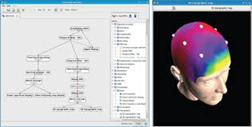
OpenViBE |
A software platform to design, test, and use Brain-Computer Interfaces (BCIs) and for generic EEG processing. |
|
|
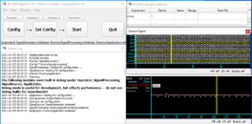
BCI2000 |
An open-source, general-purpose software system for BCI research, including tools for data acquisition, processing, and device interaction. |
|
5. Publications
- Jain, S., Ahirwal, M. K., Kumar, A., Bajaj, V., & Singh, G. K. (2016).2 QRS detection using adaptive filters: A comparative study. ISA Transactions (Elsevier).3
- Ahirwal, M. K., Kumar, A., & Singh, G. K. (2014).4 Adaptive filtering of EEG/ERP through noise cancellers using an improved PSO algorithm.5 Swarm and Evolutionary Computation.
- Ahirwal, M. K., Kumar, A., & Singh, G. K. (2012).6 Analysis and testing of PSO variants through application in EEG/ERP adaptive filtering approach.7 Biomedical Engineering Letters.
- Sahu, M. L., Atulkar, M., & Ahirwal, M. K. (2021).8 IoT-enabled cloud-based real-time remote ECG monitoring system.9 Journal of medical engineering & technology.
- Pal, H. S., Kumar, A., Vishwakarma, A., & Ahirwal, M. K. (2022).10 Electrocardiogram signal compression using tunable-Q wavelet transform and meta-heuristic optimization techniques. Biomedical Signal Processing and Control.
6. Contact Information
- Address:
Brain-Computer Interface Laboratory (BCI Lab)
Second Floor, B-Block
Department of Computer Science and Engineering, MANIT Bhopal,
Bhopal, Madhya Pradesh 462003, India11 - Email: mkahirwal@manit.ac.in12
- Contact No.: +91-9981216927
- Website:- https://sites.google.com/view/mitulkumarahirwal/bci-lab


